Part-time elderly care
Care arranged for selected hours depending on the case.
Safe and Comfortable Elderly Care at Home
Finding the right care for an elderly parent or loved one can be a sensitive decision, especially when the family wants them to stay in the comfort of their own home.
Our elderly care at home service in Egypt is designed for families who need reliable daily support for older adults, whether for a few hours a day, overnight care, or a live-in caregiver when continuous support is needed.
The goal is not only to provide someone to stay with the elderly person. The goal is to choose the right type of support based on the person’s condition, daily needs, mobility, home environment, and family expectations.
Our service focuses on respectful in-home elderly care, companionship, help with daily routines, support with movement inside the home, meal reminders, medication reminders based on the family’s instructions, and regular communication with the family when needed.
Some elderly cases may also require senior-focused nursing support. This does not mean general home nursing for all medical cases. It means that when an older adult has a clear medical need, we help the family understand whether a caregiver is enough or whether a qualified nurse is more suitable.
Contact us to describe your case, and we will help you understand the most suitable care option, expected cost, and availability.

Home care allows older adults to remain in a familiar place while receiving the daily support they need. For many families, this is more comfortable than moving the elderly person to a new environment.
A home caregiver can support the elderly person with daily non-medical care, companionship, and routine supervision. This can be helpful for families who are busy, live far away, or want extra reassurance that their loved one is not alone for long periods.
Elderly care at home may be suitable when the older adult:
The type of care should always match the real need. Some cases only require part-time support. Others may require a live-in caregiver. Some elderly people may need nursing support instead of regular caregiving.
That is why understanding the case before choosing the service is important.
An elderly caregiver provides non-medical daily care and companionship inside the home. This role is especially useful for older adults who need help with daily routines but do not require continuous medical care.
A caregiver may help with:
A caregiver is not a doctor or a nurse. She does not diagnose, change medication, or perform medical procedures. If the case requires medical tasks, the family should consider senior nursing support instead.
The main value of a caregiver is consistency, patience, and daily presence. Many older adults need someone who can communicate calmly, repeat instructions gently, and respect their habits and personal space.
Care arranged for selected hours depending on the case.
Daily support during daytime hours.
Support when night supervision is important.
Continuous presence inside the home when needed.
Senior nursing support when medically required.
The best option depends on the elderly person’s mobility, mental state, daily needs, medical condition, and whether the family needs temporary or long-term support.
Elderly care at home is suitable when the older adult needs daily support but does not necessarily need to move to a care facility.
It may be suitable for:
Older adults who live alone.
Seniors who need help with movement.
Seniors who forget meals or medication times.
Elderly people who feel lonely.
Older adults who need help during the night.
Cases that need a live-in caregiver because they should not be left alone.
However, not every case is suitable for a regular caregiver. If the elderly person needs injections, wound care, frequent medical monitoring, or nursing procedures, the family should ask about senior nursing support instead.
The purpose of this distinction is to avoid choosing a service that is either too little or more than the case actually needs.
Some families need more than part-time care. If the elderly person should not be left alone, a live-in caregiver may be the better option.
A live-in caregiver stays in the home and provides ongoing daily support according to the agreed care plan. This can be helpful when the elderly person needs assistance throughout the day or when the family wants continuous presence inside the house.
A live-in caregiver may help with:
A live-in caregiver is not a replacement for a nurse. If the elderly person has clear medical needs, the family may need senior nursing support in addition to or instead of regular caregiving.
Before arranging a live-in caregiver, the family should clarify:
Clear expectations help the service run more smoothly and reduce misunderstanding later.
If your family needs continuous support for an elderly parent, contact us to check whether a live-in caregiver is suitable and available for your case.
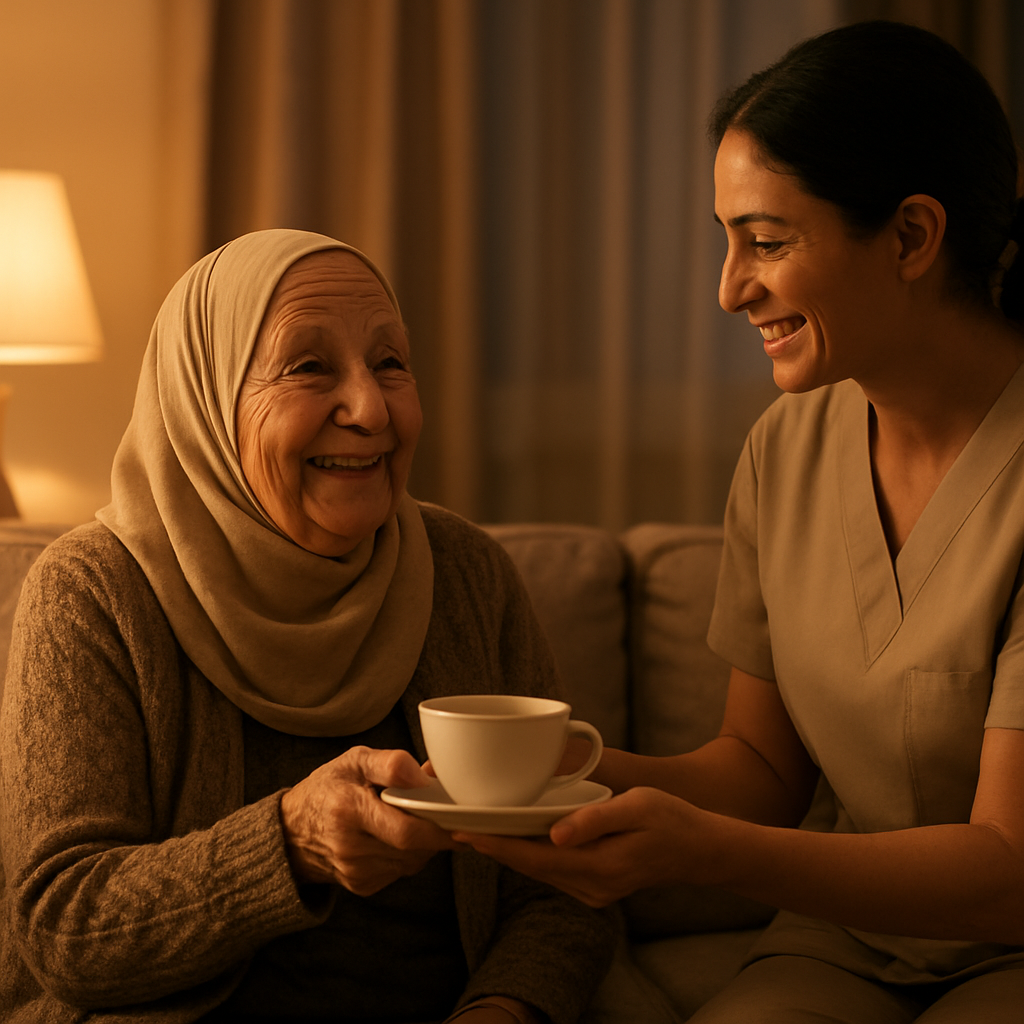
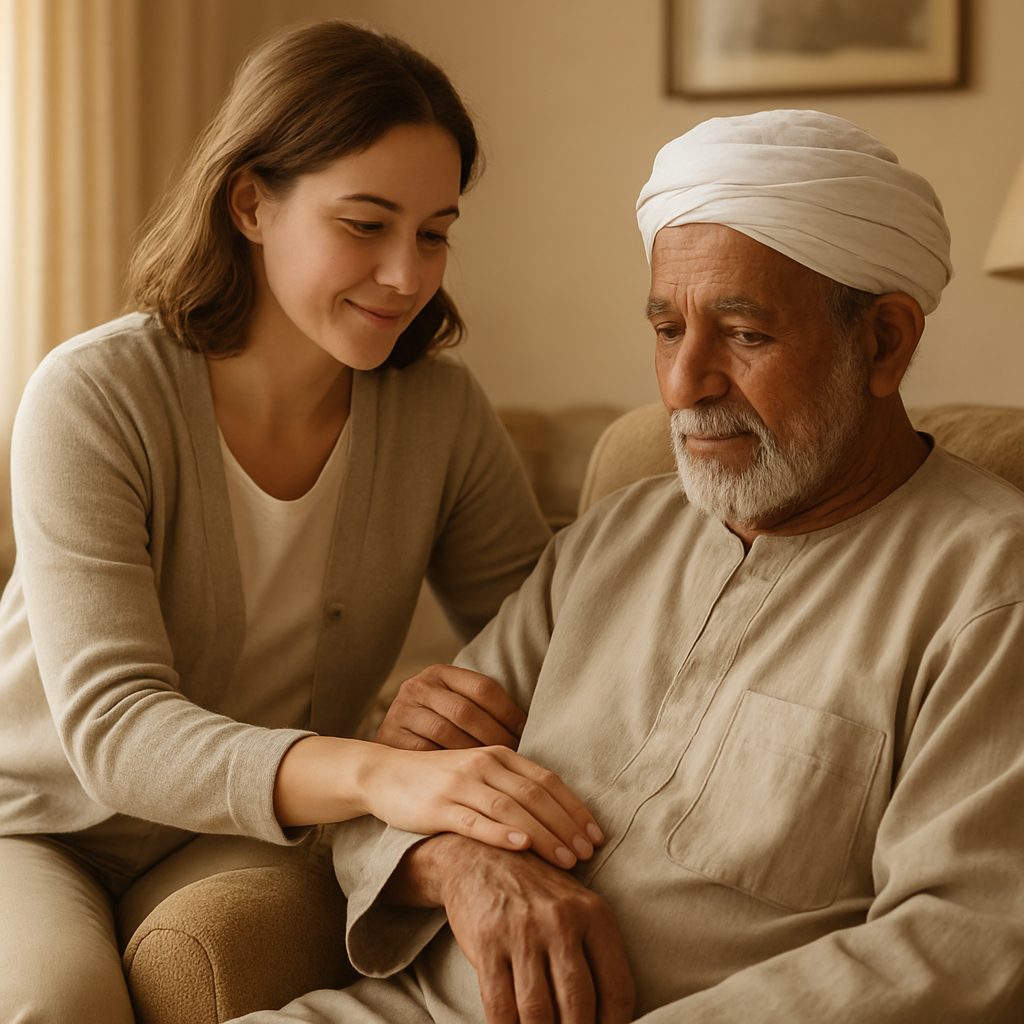
Some elderly people need more than companionship and daily support. They may need a qualified person to assist with health-related needs based on medical instructions.
This is where senior-focused nursing support may be required.
This service is not general home nursing for all cases and all ages. It is specifically related to elderly care when the older adult has a clear medical need.
A nurse’s role is different from a caregiver’s role. The caregiver provides daily non-medical support, while the nurse may help with health-related care according to qualification and instructions.
Medical decisions, diagnosis, or treatment changes must always come from a doctor. The nursing role is to support the elderly person within the limits of the care plan and professional qualification.
This service is for seniors only, and is not general home nursing for all cases.
Many families are not sure whether they need a caregiver or a nurse. The answer depends on the elderly person’s needs.
| Comparison | Elderly Caregiver | Senior Nurse |
|---|---|---|
| Main role | Daily support and companionship | Health-related support |
| Best for | Stable cases needing help with routine | Cases needing medical follow-up |
| Medication | Reminders only, based on instructions | May support medical routines if qualified |
| Medical procedures | Not included | Depends on case and qualification |
| Daily companionship | Yes | May be included, but not the main role |
| Suitable when | The elderly person needs support, not medical care | The case has clear medical needs |
A caregiver may be enough if the elderly person needs companionship, meal reminders, help moving safely, and daily routine support.
A nurse may be needed if the case requires medical follow-up, measurements, or care that should be handled by a qualified person.
Some cases may need both types of support at different stages. The right choice depends on the condition, doctor’s instructions, and family expectations.
Not sure whether you need a caregiver or a nurse? Contact us with a short description of the case, and we will help you choose the most suitable option.
The cost of elderly care at home depends on the type of care, number of hours, whether the caregiver is live-in or part-time, the elderly person’s condition, and the location.
The following prices are indicative and may change depending on availability and case details.
Prices may vary depending on:
The lowest-cost option is not always the right option. A few hours may be enough for some families, while others need continuous presence. The best approach is to describe the case first, then choose the care system that fits both the elderly person and the family.
To receive a more accurate estimate, contact us with the elderly person’s condition, required hours, and location.
Coverage depends on the care system required, availability, location, and the elderly person’s condition.
Care requests in Cairo, Giza, and Alexandria are usually easier to arrange depending on the service type and caregiver availability. Other governorates may require additional coordination, especially for part-time systems.
In some cases, live-in care may be easier to arrange outside major cities than short-hour care, depending on availability and the nature of the case.
We do not present the same availability for every area without checking the request first. The best way is to contact us with your location and care requirements so we can confirm what is possible.
To check availability in your area, send your governorate, required care type, and preferred schedule.
Choosing the right caregiver is not just about availability. The caregiver must be suitable for the elderly person’s needs, personality, home environment, and family expectations.
The process usually includes several steps.
We ask about age, mobility, daily needs, medical instructions if any, living situation, required hours, care type, and whether the family needs a caregiver or nurse.
We help determine whether the family needs part-time care, day care, night care, live-in care, senior nursing support, or a combined plan.
The caregiver should be suitable for the case, not just available, considering experience, communication style, reliability, and home expectations.
After care starts, the family may adjust the schedule, change the care system, or request replacement if the match is not suitable.
We first ask about the elderly person’s condition:
After understanding the case, we help determine whether the family needs:
The caregiver should be suitable for the case, not just available. We consider experience, communication style, reliability, and ability to work within the home’s expectations.
Before starting, duties should be clear:
After care starts, the family may need to adjust the schedule, increase or reduce hours, change the care system, or request a replacement if the match is not suitable.
Care needs may change over time, especially with older adults. Follow-up helps keep the care plan realistic and useful.
Elderly care is a personal and sensitive service. Families need to feel confident before allowing someone into the home to care for a parent or loved one.
We focus on the elements that matter most to families.

We do not treat every elderly case the same way. The right support depends on the person’s mobility, health condition, emotional needs, and the family’s daily routine.
Clear duties reduce misunderstanding. Before starting, the family should know what the caregiver can do, what is not included, and when nursing support may be required.
Good care is not only about tasks. Older adults need patience, calm communication, and respect for their routine, privacy, and dignity.
Families should understand the expected cost before starting. Prices depend on the care system, hours, location, and case needs.
Sometimes the first match is not the right one. If there is a clear issue, the situation can be reviewed and handled according to the agreed terms and availability.
An elderly caregiver provides daily non-medical support such as companionship, help with movement, meal reminders, medication reminders based on family instructions, light personal care support, and routine supervision.
A caregiver does not perform medical procedures or replace a nurse when the case requires medical care.
Contact us with the elderly person’s condition, location, and required schedule.
We will help you understand the most suitable care option and expected cost based on availability.